Email Bounce Rate: What's Good, How to Calculate It, and How to Reduce It
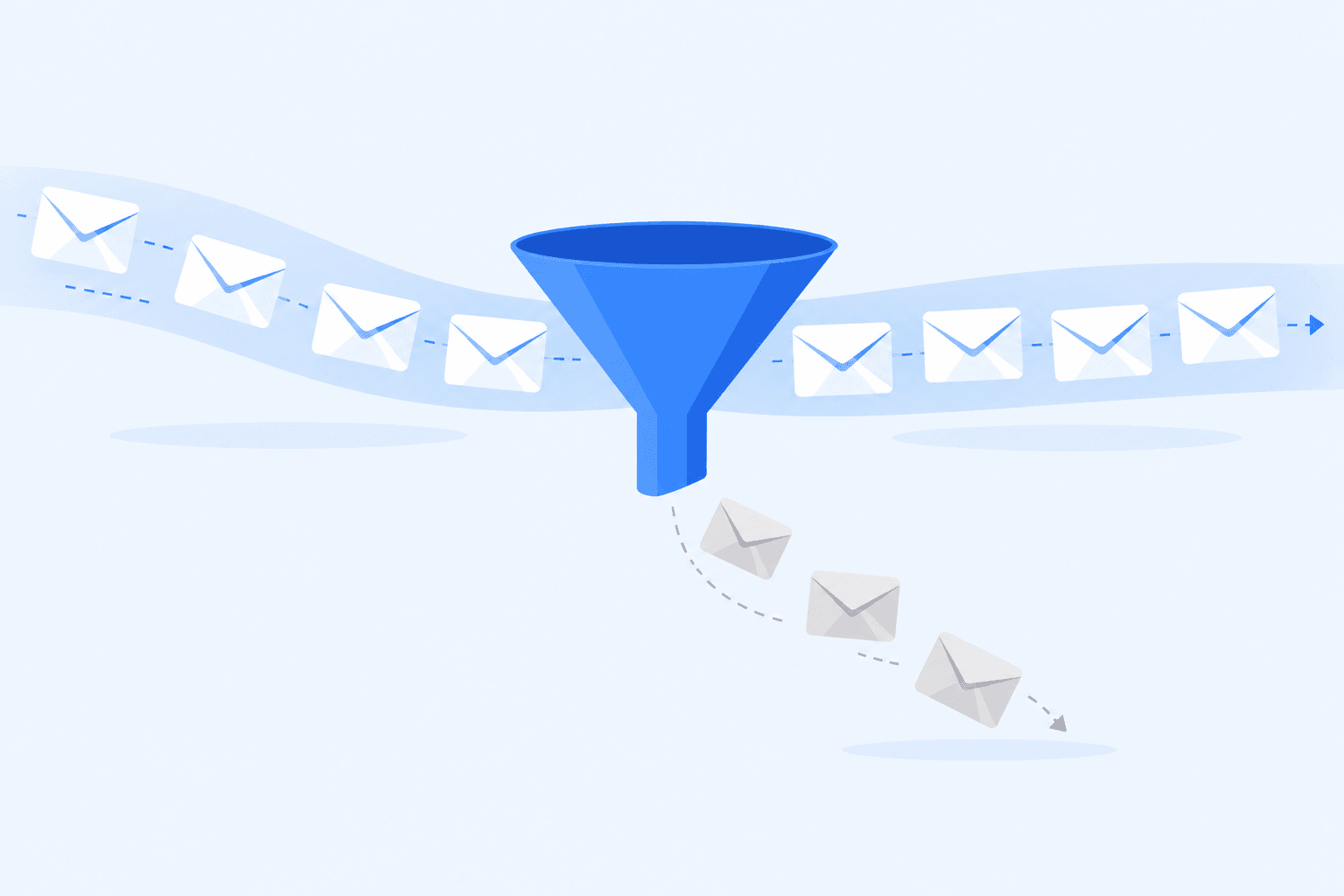
Your email bounce rate is the share of the emails you sent that couldn't be delivered and came back to you. A bounce rate under 2% is generally considered healthy, and under 1% is the range to aim for.
This guide covers what the bounce rate for email means, how to calculate it, what a good number looks like, and how to lower it, mostly by catching bad addresses before you send.
What Is Email Bounce Rate?
Email bounce rate is the percentage of sent emails that the receiving mail servers rejected. In email marketing, a "bounce" is a message that never reached the inbox, because the address doesn't exist, the domain has no mail server, or the receiving server refused it for now.
The calculation is simple: bounced emails divided by emails sent, times 100. The section on calculating your bounce rate below walks through an example.
Bounce rate is a list-quality signal. A rising number usually means your list contains addresses that are no longer (or never were) valid.
Hard Bounces vs. Soft Bounces
Not every bounce means the same thing. Mail servers separate permanent failures from temporary ones.
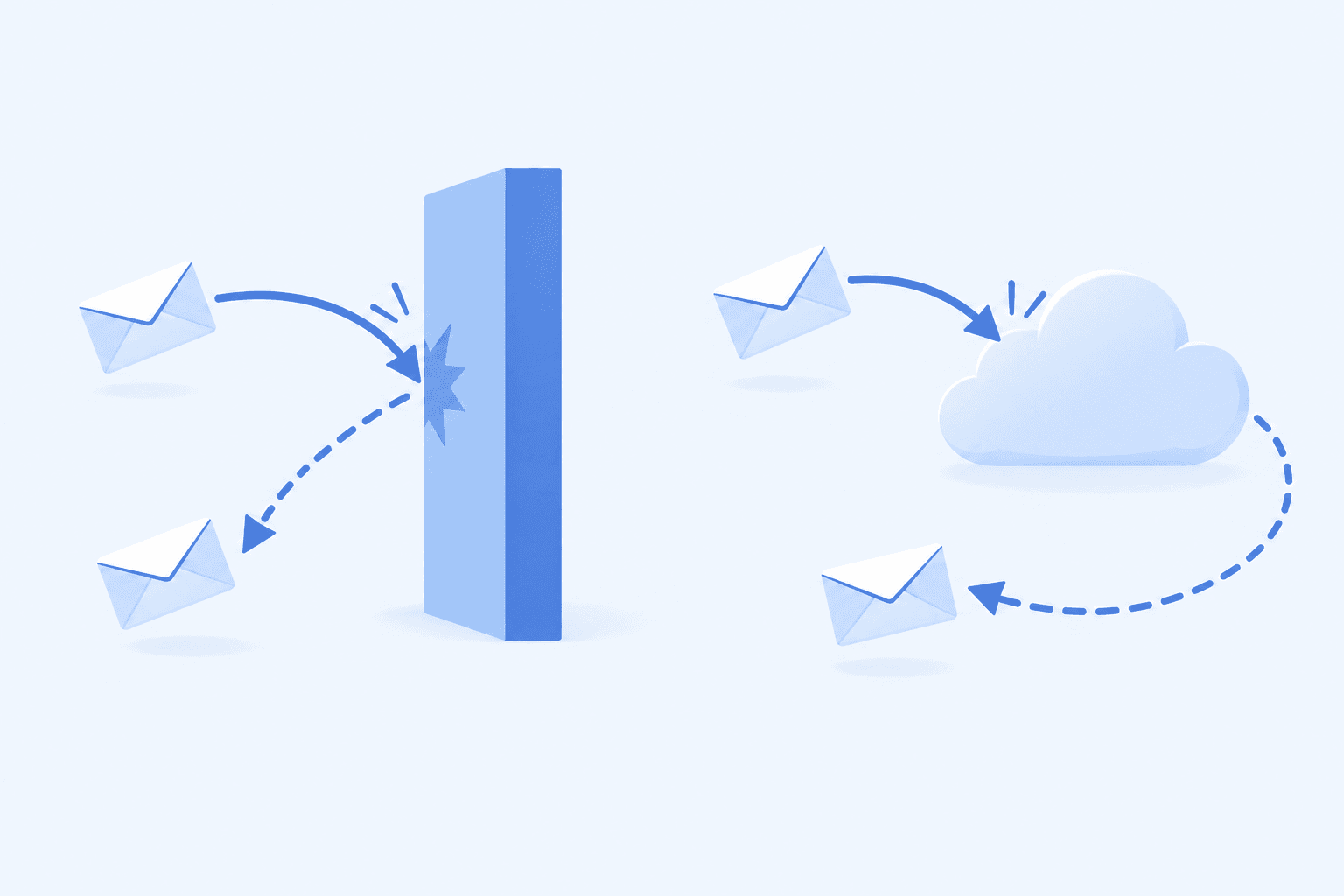
- Hard bounce: a permanent failure. The address is invalid, the mailbox doesn't exist, or the domain is blocked. Retrying won't help.
- Soft bounce: a temporary failure. The inbox is full, the server is down, or the message is too large. Your sending tool usually retries, and an address that keeps soft-bouncing is typically converted to a hard bounce after repeated failed attempts (Campaign Monitor).
When you see a high email bounce rate (above the 2% mark covered below), check which kind is driving it. Mostly hard bounces point at the list itself: old, mistyped or made-up addresses. Mostly soft bounces point at temporary conditions on the receiving side, or at your own sending setup. One such condition is greylisting, where a server defers mail from unknown senders until they retry.
For what each 5xx and 4xx code means and how to handle it, see our guide to SMTP bounce codes and how to respond to them.
How to Calculate Your Email Bounce Rate
The email bounce rate formula is:
Bounce rate = (bounced emails ÷ emails sent) × 100
A worked example: you send a campaign to 10,000 addresses and 150 of them bounce.
150 ÷ 10,000 = 0.015, and 0.015 × 100 = 1.5%.
Calculating it yourself is useful when you want to split it into a hard bounce rate and a soft bounce rate, or compare campaigns sent from different tools. Use the same inputs each time so the numbers stay comparable.
What's a Good Email Bounce Rate?
The benchmarks published by different email vendors land in the same place:
| Bounce rate | What it means |
|---|---|
| Under 1% | Ideal, and around the average range |
| Under 2% | Healthy, generally considered acceptable |
| 2–5% | Warning sign: look at your list and your bounce types |
| Above 5% | A real problem: stop and clean the list before the next send |
The under-2% and under-1% figures appear across Mailtrap, ZeroBounce, Campaign Monitor, monday.com and Outfunnel. The 2–5% and above-5% bands come from Mailtrap and monday.com. All sources checked in September 2026.
The average email bounce rate also varies by industry. ZeroBounce's bounce rate benchmark page (checked September 2026) lists these examples:
| Industry | Bounce rate |
|---|---|
| E-commerce | 0.57% |
| Retail | 0.62% |
| Non-profits | 0.8% |
| Marketing and advertising | 1.33% |
Treat these as a rough email bounce rate benchmark, not a target. If your number sits well above your industry's, your list needs attention even if it's under 2%.
Why a High Bounce Rate Hurts Deliverability
A high bounce rate tells mailbox providers that you're sending to addresses you haven't kept up to date. That can indicate an old list, a purchased list, or a signup form that accepts anything. Providers factor this into your sender reputation, and a weaker reputation means more of your mail lands in spam or gets blocked, including mail to your valid subscribers.
The large providers have also made their expectations explicit. Google's email sender guidelines (checked September 2026) require bulk senders, those sending 5,000 or more messages a day to Gmail, to:
- authenticate their mail with SPF, DKIM and DMARC,
- offer one-click unsubscribe, and
- keep the spam rate reported in Postmaster Tools below 0.30%, with Google recommending staying under 0.10%.
That spam rate is a different metric from bounce rate: it counts recipients marking your mail as spam, not failed deliveries. But both come from the same habit. Senders who keep their lists clean and only mail people who asked for it tend to stay on the right side of both numbers, and a list full of stale addresses tends to cause problems with both.
You can check your domain's SPF, DKIM and DMARC setup with our free domain health check.
How to Reduce Your Email Bounce Rate
These steps reduce the email bounce rate at the source, starting with the one that has the biggest effect:
- Verify addresses before you send. Run your list through an email verifier before each large campaign, and remove addresses that will bounce. Addresses that were valid last quarter can be dead today.
- Remove hard bounces immediately. A hard-bounced address won't start working. Suppress it after the first hard bounce.
- Clean your list on a schedule. Don't wait for the bounce rate to climb. Our guide on how to clean your email list walks through the process, and if you send from Mailchimp, see how to clean your Mailchimp email list.
- Watch soft bounces instead of ignoring them. A single soft bounce is normal. The same address soft-bouncing campaign after campaign is effectively dead, so set a threshold for suppressing it.
- Authenticate your sending domain. SPF, DKIM and DMARC won't fix invalid addresses, but they reduce the chance that receiving servers reject your mail for policy reasons.
Verify Before You Send, With CampaignKit
CampaignKit doesn't read your campaign reports or calculate your bounce rate. It checks addresses before you send, so fewer of them bounce in the first place. For a closer look at what a check covers, see how to check if an email is valid.
Each address gets a syntax check, an MX record lookup for the domain, and a mailbox check against the receiving server. The result is a score from 0 to 10:
| Score | Meaning |
|---|---|
| 0 | The email will bounce |
| 2 | Can be used, but looks like a spam trap or temporary address |
| 9 | Looks good, but the mailbox couldn't be verified |
| 10 | Passed all checks, and the server will accept emails |
A result code tells you why an address scored the way it did: syntax, domain (the domain doesn't exist or has no MX record), mailbox (unknown recipient), verifyRejected (the server refused verification), blacklist, disposable or catchAll. When a failed address's domain looks like a typo of a well-known provider, such as gmai.com, the result also suggests a correction (didYouMean). It never overrides a passing result.
A score of 9 means the mailbox couldn't be confirmed, so verification cuts bounces rather than eliminating them. Removing every score-0 address before you send takes out the addresses the check found will bounce.
- One address: paste it into the free email verifier. No signup needed.
- A full list: upload a CSV or Excel file. New accounts get 200 free validations with no credit card required, and after that pricing starts at $6 for 2,500 emails ($2.40 per 1,000), down to $1.20 per 1,000 at 100,000. Credits never expire.
Keep Your Bounce Rate Low
Calculate your bounce rate for each campaign, aim for under 2% (and ideally under 1%), and split it into hard and soft bounces when it rises. The most reliable way to keep it down is to remove bad addresses before they bounce.
Check an address now with the free email verifier, or clean a whole list with 200 free validations. See pricing for bulk plans.
More on deliverability
- Navigating Gmail's New Email Delivery StandardsEssential Insights for Adapting to Google's Latest Email Protocols
- 8 Actionable Steps to Improve Email DeliverabilityAs an Email Marketer, you should always have a clear understanding of your email marketing metrics. Blindly emailing your audience without proper…
- The Secret About Email Subject LinesDiscover tips for crafting compelling subject lines and the essential habits, like list cleaning, for true email marketing success.
- 5 Ways to Damage Your Domain ReputationA damaged domain reputation is hard to fix. You want to avoid this at all costs. What do you need to do to damage your sender reputation?
Join 1,000+ CompaniesImproving Email Deliverability
Start with 200 free validations. Upgrade only when you're ready.
No credit card required • Cancel anytime